Islington council permits and fines for fly tipping and rubbish
Posted on 21/10/2026
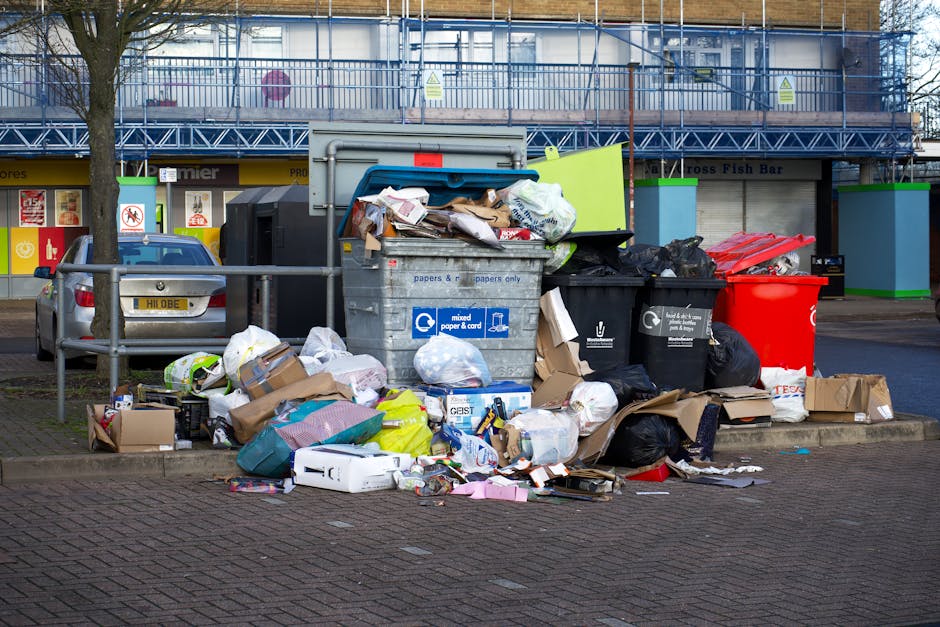
If you're dealing with a pile of unwanted waste in Islington, or you're trying to avoid a fine for getting rid of it the wrong way, you're in the right place. The rules around Islington council permits and fines for fly tipping and rubbish can feel a bit tangled at first. Do you need a permit? What counts as fly tipping? How much trouble can you get into if bags, mattresses, builders' waste, or old office junk are left in the wrong place?
Truth be told, most problems start with a simple misunderstanding: people either assume council services will take everything, or they hand waste to someone who is not properly authorised. This guide breaks the whole thing down in plain English. You'll learn how local permits work, what typically triggers fines, how to avoid common mistakes, and what sensible next steps look like if you want your waste removed properly and without drama.
- Why it matters
- How the process works
- Benefits and practical advantages
- Who this is for
- Step-by-step guidance
- Expert tips
- Common mistakes
- Tools, resources and recommendations
- Law, compliance and best practice
- Options and comparison table
- Real-world example
- Practical checklist
- Conclusion
- Frequently asked questions
Why Islington council permits and fines for fly tipping and rubbish Matters
Waste in a dense London borough isn't just a housekeeping issue. It affects pavements, shared entrances, bin stores, alleyways, courtyards, shop fronts, and the general feel of a street. In Islington, where flats, HMOs, conversions, terraces, and busy commercial streets all sit side by side, rubbish can turn into a nuisance quickly. One missed collection day, one fly-tipped sofa, or one overloaded bin area can create a knock-on effect for everyone nearby.
That's why permits and enforcement matter. They exist to separate legal, controlled waste disposal from unlawful dumping. If waste is placed in the wrong spot, left without the right permissions, or given to the wrong person, the result can be a fixed penalty, a formal investigation, or a much bigger bill than expected. And no, the council does not usually care that the skip looked "temporary" or that the pile was "just for one night". The street sees what the street sees.
For residents, landlords, managing agents, and businesses, this is also about reputation and convenience. A clean, compliant waste plan is simpler than dealing with complaints, blocked access, neighbour disputes, or a fine notice arriving later than you'd like. If you're planning a clearance, you may also want to understand broader options such as the full range of waste removal services available in Islington, especially if the job is bigger than a few bags.
Practical takeaway: if rubbish is likely to sit on a street, pavement, verge, communal area, or shared access point, assume you need to think about permissions, timing, and responsibility before it goes out. That one decision can save a lot of hassle.
How Islington council permits and fines for fly tipping and rubbish Works
Let's separate the two ideas first, because they're related but not identical. A permit is generally about lawful placement or collection arrangements. A fine is about enforcement after something has gone wrong, or after the council believes the rules have been broken. In practice, both sit inside the same waste-management picture.
If you need to place a skip, store waste temporarily, arrange building materials, or organise disposal from a property with awkward access, permission may be needed from the relevant authority or landowner. The exact requirement depends on where the waste sits, who owns the land, and whether the activity affects the public highway or shared spaces. In a borough like Islington, space is tight, so even a small skip or loading arrangement can create issues if it blocks visibility, pavements, or entrances.
Fines are usually associated with fly tipping, improper disposal, illegal dumping, littering offences, or waste being set out in a way that breaks local rules. A few examples help:
- Leaving rubbish bags beside overflowing bins because the communal store is full
- Dumping old furniture in a stairwell, yard, or alleyway
- Handing waste to an unlicensed operator who later dumps it elsewhere
- Putting builders' rubble out in a place that is not approved
- Leaving waste on the street without the correct permission or collection setup
To be fair, many people don't set out to break the rules. They're trying to get rid of something awkward and cheap, often on a stressful weekend when the flat already feels too full. But intent and outcome are not the same thing, especially when waste is found dumped in a public place.
It also helps to understand the difference between a council collection, a private clearance, and illegal dumping. A legitimate clearance should provide a proper service trail, clear pricing, and safe handling. If you are comparing routes, you might find it useful to review guidance on choosing the right rubbish removal option before you commit.
Key Benefits and Practical Advantages
There's a surprisingly strong upside to getting waste management right. It's not just about avoiding a penalty. Good compliance has everyday benefits that you feel immediately, especially in a busy borough.
- Fewer complaints: Neighbours, tenants, and passers-by are less likely to report your property if waste is controlled properly.
- Lower risk of fines: Clear disposal arrangements reduce the chance of enforcement action and the stress that comes with it.
- Cleaner access: Doorways, pavements, and bin areas stay usable. That matters for deliveries and residents alike.
- Better planning: You can schedule collections around works, move-outs, or refurbishment deadlines without scrambling at the last minute.
- Safer handling: Sharp items, heavy objects, and mixed waste are managed more sensibly when you plan ahead.
There's also a financial angle. A proper permit, approved collection, or lawful clearance often costs less than dealing with an enforcement notice, a re-collection, or lost time sorting out a mess after the fact. In our experience, people underestimate the "hidden cost" of doing things twice. A cheap shortcut usually stops being cheap the moment someone has to clear the mess again.
For commercial sites, the benefits are even more obvious. A tidy frontage supports customers and reduces the chance of staff, contractors, or tenants making bad assumptions about what can be dumped where. If you manage a shop, office, or building project, keep an eye on services such as office clearance in Islington and builders' waste disposal when the waste stream is mixed or time-sensitive.
Who This Is For and When It Makes Sense
This topic matters to a wider range of people than you might think. It's not only for landlords or builders. In Islington, the same waste issue can show up in a one-bedroom flat, a shared HMO, a retail unit, a family house, or a refurbishment site. Different setting, same headache.
- Residents: If you're clearing out bulky items, old appliances, or a post-move pile-up.
- Landlords and letting agents: For end-of-tenancy clearances, dumped furniture, and tenant waste issues.
- Builders and trades: If you need construction waste removed or stored briefly before collection.
- Business owners: If waste is affecting customers, staff, or a shopfront.
- Property managers: When communal bins overflow or fly tipping happens near shared areas.
The question is not only "Can I leave this here?" It's also "Who is responsible if it causes a problem?" That's where people get caught out. A landlord may think the tenant is responsible, the tenant may think the block manager will handle it, and the council may simply see waste in the wrong place. Bit awkward, really.
If you're in a flat-heavy area or a place with tight access, it may also be worth reading about common clearance issues in local housing stock, such as rubbish clearance for flats and HMOs in N1. Those properties tend to have the same recurring problems: no lift, narrow stairwells, limited storage, and very little patience from neighbours when bins are overflowing.
Step-by-Step Guidance
If you want to stay on the right side of Islington council permits and fines for fly tipping and rubbish, a simple process helps. The point is not to overcomplicate it. It's to avoid assumptions.
- Identify the waste type. Household rubbish, bulky furniture, green waste, builders' rubble, and commercial waste are not all treated the same way.
- Check where it will be placed. Private land, shared land, a pavement, road, alley, forecourt, or bin area each brings different considerations.
- Decide whether a permit or permission is needed. If anything will sit on public land or interfere with access, check before you set it down.
- Use a legal disposal route. Choose a provider that can handle the waste properly and give you a clear record of what is being taken.
- Separate reusable, recyclable, and general waste where possible. This often makes collection easier and cheaper.
- Time the collection properly. Avoid leaving waste out too early or over a weekend if it risks spilling onto the street.
- Keep evidence. Photos, booking confirmations, receipts, and messages can be useful if there is any dispute later.
Here's a small but important detail: if you are using a contractor, make sure you understand what happens after they collect the waste. Responsible disposal is not just about removing it from sight. It has to go somewhere lawful. If that part sounds obvious, good. You'd be surprised how often people skip it and regret it later.
For those comparing service levels, a well-run removal can be more flexible than trying to manage waste yourself. Same-day or next-day collections can matter when a move-out, renovation, or landlord handover is already under pressure. A useful place to start is the local rubbish clearance service page, especially if the problem is already bigger than a few bin bags.
Expert Tips for Better Results
Most waste problems in Islington are avoidable with a bit of planning. The clever part is not being perfect; it's being just organised enough that the mess never gets a chance to become a problem.
- Book before the pile gets unmanageable. It's much easier to sort a clean corner of a room than a mountain in the hallway.
- Use the right size service. Over-ordering wastes money; under-ordering leads to leftovers, which then become a second task.
- Keep public areas clear. Do not leave waste creeping into walkways, even if you think it's only temporary.
- Ask about access early. Narrow streets, controlled parking, and basement flats can affect collection timing.
- Be cautious with "cheap" offers. If someone cannot explain where your waste goes, that's a red flag. Simple as that.
Another smart move is to separate the easy stuff first. Cardboard, loose recycling, and small items can be dealt with quickly, which reduces the volume of what needs more expensive handling. A lot of people do the heavy lifting too late. Then it all feels urgent. This is where a small bit of admin saves you a bigger job later.
If you are pricing up a clearance, it can help to understand how cost is usually broken down. Weight, volume, access, labour, and disposal route all matter. For a more grounded overview, see the real cost of rubbish clearance in Islington. That kind of breakdown makes the numbers feel less mysterious.
Common Mistakes to Avoid
Some mistakes are so common they almost feel normal. They're not. They're just common. And in waste matters, common mistakes can become expensive ones.
- Assuming the council will remove anything left outside. It won't necessarily, and uncollected items can become a problem very quickly.
- Leaving waste near bins "for now". This is one of the easiest ways to invite complaints or enforcement.
- Using an unlicensed collector. If the waste is later dumped, responsibility can come back to you.
- Mixing hazardous or awkward items with household waste. This can create handling and compliance issues.
- Not checking access restrictions. A collection that cannot get near the property causes delays and sometimes extra costs.
- Ignoring neighbour impact. In shared blocks, one household's bad day can become everyone else's noise, smell, and mess.
There's also the classic "I thought someone else would handle it" problem. Happens all the time in blocks, offices, and managed buildings. The fix is usually boring, but effective: confirm responsibility in writing, then book the disposal properly. A bit dull, yes. Also much cheaper than arguing later.
If you want a practical local perspective, the guide to avoiding clearance delays on Holloway Road is a useful reminder that timing, access, and traffic can make a real difference in Islington.
Tools, Resources and Recommendations
You do not need fancy tools to manage waste well, but a few simple resources make the job much easier. Think of this as a sensible toolkit rather than a complicated system.
- Photo records: Take pictures before and after clearance, especially for shared property or handovers.
- Room-by-room sort lists: Helpful for house clearances, office moves, and landlord inventories.
- Booking notes: Keep the collection date, access instructions, and item list together in one place.
- Basic packing materials: Sacks, tape, and labels help separate rubbish from reusable items.
- Clear communication with neighbours or tenants: A short note about collection timing can prevent misunderstandings.
For larger or more sensitive jobs, it's worth using a company that can explain insurance, handling practices, and disposal standards clearly. That way you are not guessing. You're making an informed decision, which is usually the difference between a clean result and a headache.
If your waste includes garden cuttings, soil, or seasonal outdoor debris, you may also want to look at garden waste removal in Islington. Outdoor waste behaves differently from household rubbish, and it can be surprisingly awkward once it starts decomposing or spreading through shared bins.
For a broader view of disposal standards and how reputable operators approach recycling, recycling and sustainability is a sensible reference point. Not everything should go to general waste if it can be reused, recycled, or separated more thoughtfully.
Law, Compliance, Standards, or Best Practice
Waste disposal in the UK is governed by legal duties and local enforcement practices, and the broad principle is simple: you are responsible for making sure your waste is handled properly. That responsibility does not vanish because you paid someone else, and it does not disappear because the rubbish was "only a small amount".
In practice, good compliance means three things:
- Right place: Waste should not be left on land or highway without permission.
- Right person: The collector or handler should be legitimate and able to dispose of waste lawfully.
- Right timing: Waste should be removed within a sensible timeframe and not left to become a nuisance.
Best practice also means keeping enough evidence to show you acted responsibly. That may include booking details, service notes, and confirmation of collection. If there is ever a dispute, having a paper trail helps. It's not glamorous, but it works.
For businesses and property managers, it is wise to build waste handling into routine operations rather than treating it as a one-off chore. That means clear instruction, consistent contractor checks, and an understanding of who signs off the job. If you are overseeing a refurbishment, insurance and safety considerations are worth reviewing too, especially where heavy or awkward items are involved.
Where permits are involved, do not rely on guesswork. Requirements can vary depending on location, property layout, and how waste is being stored or moved. If in doubt, check early. That single phone call or booking review can prevent a lot of noise later on.
Options, Methods, or Comparison Table
There are a few ways to deal with rubbish in Islington, and each has its place. The best option depends on the amount of waste, how quickly it needs to go, and whether access is easy or a bit of a nightmare. Let's face it, some mews, basements, and terrace layouts are not built for easy disposal.
| Option | Best for | Pros | Watch out for |
|---|---|---|---|
| Council disposal route | Smaller routine waste issues | Simple for standard household needs | May not suit bulky, urgent, or unusual loads |
| Private rubbish clearance | Bulky items, mixed loads, time-sensitive jobs | Flexible, quicker, can include labour | Quality and legality depend on the provider |
| Skip hire or controlled container use | Works, renovations, recurring waste | Useful for ongoing or heavy waste streams | May need permission if placed on public land |
| DIY disposal | Small loads and straightforward access | Full control over timing | Time-consuming, vehicle access, and disposal compliance |
There is no single "best" method for everyone. A flat clearance after a tenancy is different from an office refurbishment or a rear-garden tidy-up. If you need a more tailored route, the local house clearance service may be a better fit than trying to piece together several smaller collection arrangements.
Case Study or Real-World Example
Here's a realistic example. A landlord in Islington has a flat to re-let after a tenant move-out. The property is in a converted building with a narrow entrance and no lift. Inside, there's a mattress, two armchairs, broken shelving, bags of mixed rubbish, and a few bits of recycling that have been left to one side. The landlord is keen to get it sorted fast because viewings are booked for the following week.
The temptation is to push the bags into the communal area "just until tomorrow". But that would create a nuisance in a shared block, and if the waste sits in the wrong place it can become an issue. Instead, the better approach is to book a legal clearance, confirm access times, and keep the waste inside until collection. The items are removed in one visit, the entrance stays clear, and the flat is ready without any neighbour complaints or awkward notes on the door.
That kind of job sounds simple from the outside. It rarely is. There's usually a staircase, a parked van, someone's bike in the hall, and a tenant asking if the old lamp can be kept "just in case". But handled properly, it becomes a normal job rather than a problem.
For similar situations in local residential blocks, the article on Barnsbury waste removal before and after offers a helpful sense of what organised clearance looks like in practice.
Practical Checklist
Use this checklist before you leave rubbish out, book a collection, or arrange disposal. It's short, but it covers the bits people most often miss.
- Have I identified the type of waste correctly?
- Will the waste sit on private land or public space?
- Do I need permission or a permit for where it will be placed?
- Have I checked who is responsible for the waste?
- Is the collector or service able to dispose of it legally?
- Have I separated recyclable or reusable items where sensible?
- Have I kept photos or records of the waste and booking?
- Will the collection time avoid blocking access or causing nuisance?
- Am I clear on any extra costs, access limitations, or labour involved?
- Will the waste be fully removed, not just moved out of sight?
If you can tick all of those, you are in a much stronger position. Not perfect. Just sensible. And in waste management, sensible wins more often than not.
Get a free quote today and see how much you can save.
Conclusion
Islington council permits and fines for fly tipping and rubbish are really about one thing: making sure waste is handled responsibly in a busy urban area where space is limited and mistakes are easy to spot. If you understand where waste can legally go, who is responsible for it, and when permission is needed, you can avoid most of the common traps.
The safest approach is straightforward. Check the location, choose a legitimate disposal route, keep records, and do not leave waste in shared or public spaces unless you are sure it is allowed. That's the calm version. The less calm version involves fines, complaints, and a lot of wasted time.
If you're planning a clearance or dealing with an awkward pile of rubbish, it's worth acting early rather than hoping it sorts itself out. Usually, it won't. But handled well, the job can be clean, quick, and oddly satisfying. There's something nice about a space being properly clear again.

 Tipper Van - Waste Removal and Rubbish Clearance Prices in Islington, N1
 Luton Van -


